Bihar's Political Protocol War Explodes! Samrat Choudhary Government Makes MP-MLA Invitations Mandatory at Official Events
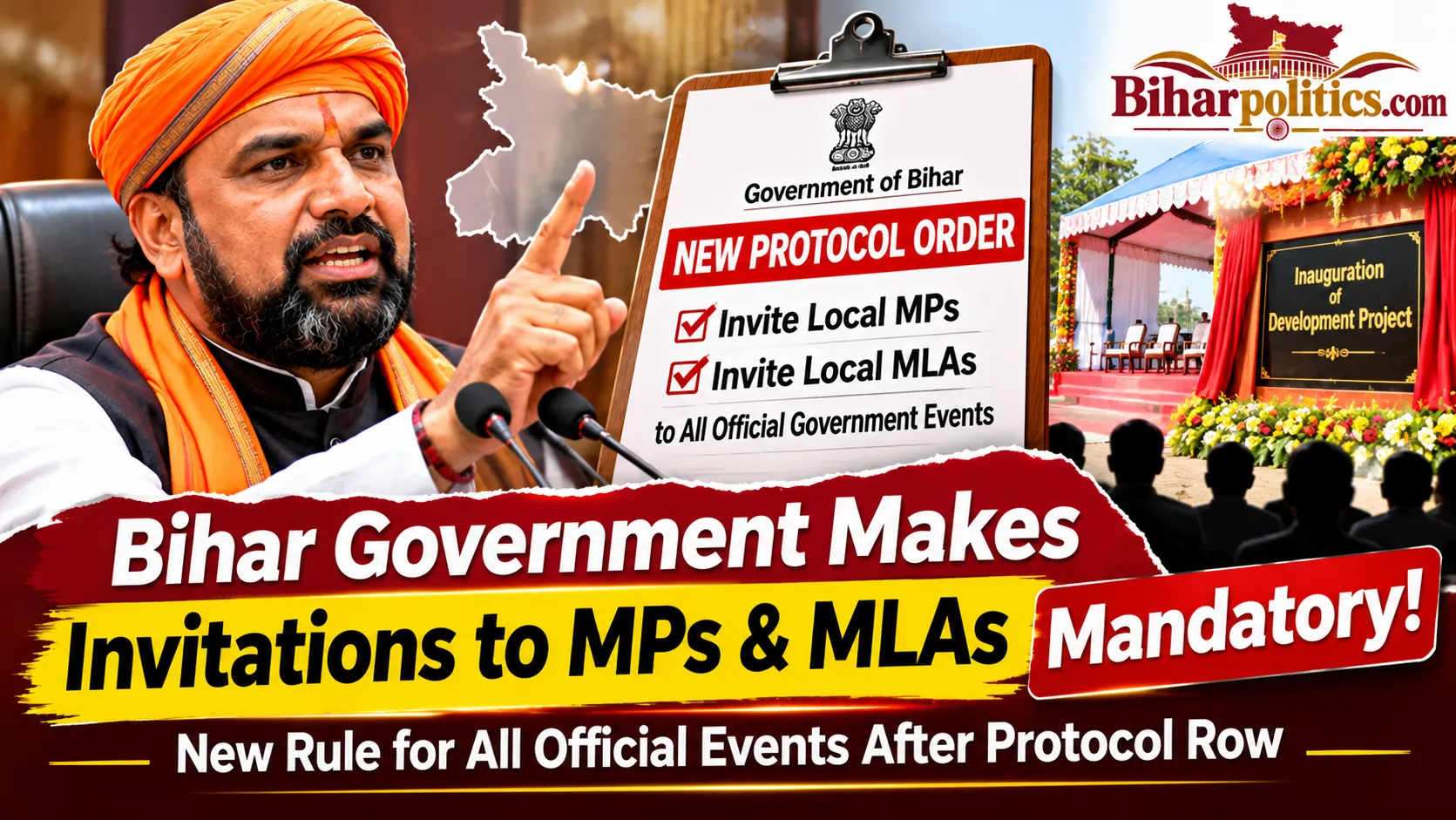
Introduction: A protocol dispute reaches the government
Bihar's political administration has witnessed another controversy involving the relationship between elected representatives and government officials.
The state government has directed departments to invite local Members of Parliament and Members of Legislative Assembly to official events.
The decision follows a dispute concerning government officials inaugurating public projects and conducting official ceremonies without the involvement of elected representatives.
The issue has become politically significant because public inaugurations and foundation-stone ceremonies are often important occasions for elected representatives to engage with their constituencies.
The government's intervention is intended to clarify the protocol surrounding these programmes.
What prompted the government to intervene?
The controversy developed after disagreements emerged over officials conducting inauguration-related activities for public projects.
Such events can include:
Inauguration of public buildings.
Opening of infrastructure projects.
Foundation-stone ceremonies.
Government development programmes.
Public project-related official functions.
Elected representatives have a recognised political role in representing their constituencies.
When they are excluded from important public events, disagreements can emerge between political representatives and the administrative machinery.
The government has now directed departments to ensure that local MPs and MLAs receive invitations to official functions.
What does the new protocol mean?
The reported direction reinforces the participation of elected representatives in government programmes.
It places greater emphasis on coordination between departments and the political representatives of the areas where public projects are being implemented.
This does not mean that elected representatives replace the administrative authorities.
Government officials continue to have their own responsibilities concerning implementation, technical supervision and public administration.
The direction concerns the participation and protocol surrounding official functions.
Why is this important for Samrat Choudhary?
The development is politically important for the Samrat Choudhary government because it involves the relationship between political leadership and bureaucracy.
A government needs effective coordination between elected representatives and administrative officers.
If this relationship becomes strained, even routine development activities can generate political controversy.
The government's intervention provides an opportunity to establish clearer procedures.
It also allows the ruling leadership to demonstrate that it recognises the institutional importance of MPs and MLAs.
The opposition's potential questions
Although the direction has clarified the invitation protocol, opposition parties may examine how fairly it is implemented.
Several questions could emerge:
Will opposition MPs and MLAs receive the same treatment as ruling-party representatives?
Will departments follow the instructions consistently?
Will the invitation process be communicated in advance?
Will local representatives be given appropriate recognition during public events?
Will future disputes be resolved through administrative procedures?
These questions matter because democratic representation should not depend on political affiliation.
The importance of elected representation
An MP or MLA represents people from a defined constituency.
Public infrastructure projects affect residents directly, and elected representatives are often expected to communicate local demands and monitor public concerns.
Their presence at public events can also provide an opportunity to explain project benefits and hear complaints.
At the same time, public projects must remain governed by professional administrative standards.
A balanced protocol should therefore recognise both democratic representation and administrative responsibility.
Could the decision reduce political confrontations?
The government appears to be addressing a problem that could otherwise generate repeated disagreements.
Clearer instructions can reduce confusion over who should be invited and who should participate in official ceremonies.
However, the effectiveness of the decision will depend on how departments implement it.
If the instructions are followed inconsistently, the same controversy could return.
Political implications beyond government ceremonies
This issue reflects a broader challenge in Bihar politics.
The relationship between elected representatives and administrative officers is essential for governance.
Disagreements over recognition, public events and project responsibilities can affect the political environment.
For the ruling government, maintaining coordination will be important.
For the opposition, monitoring implementation provides another opportunity to question administrative fairness.
What happens next?
The main development to watch is whether government departments consistently follow the new protocol.
Future inaugurations and official programmes will provide an opportunity to assess implementation.
Any fresh disputes could again bring the matter into political debate.
Conclusion: A protocol decision with wider democratic implications
The Bihar government's direction to invite local MPs and MLAs to official events is more than a ceremonial adjustment.
It concerns the relationship between elected representatives and the administrative machinery.
For Samrat Choudhary's government, the challenge is to ensure consistent implementation.
For Bihar's political institutions, the broader principle is clear: public administration and democratic representation must work together.