Bihar MLC Polls: Tejashwi Yadav Alleges Fake Voters as JD(U) Rift Triggers Clash in Mokama
Patna, October 24, 2026: Polling for eight seats in the Bihar Legislative Council concluded on Friday amid allegations of electoral irregularities, political accusations and a confrontation between supporters of rival candidates in Mokama. The elections have drawn attention to divisions within the ruling National Democratic Alliance (NDA), particularly after JD(U) MLA Anant Singh backed a Jan Suraaj Party candidate against his own party’s official nominee.
According to provisional figures reported by the media, the four teachers’ constituencies recorded a turnout of 74.55%, while the four graduates’ constituencies recorded 43.87%. A total of approximately 5.32 lakh electors were eligible to vote, with 150 candidates contesting the eight seats. Counting is scheduled for October 27.
Tejashwi Yadav Raises Allegations Over Voter Lists
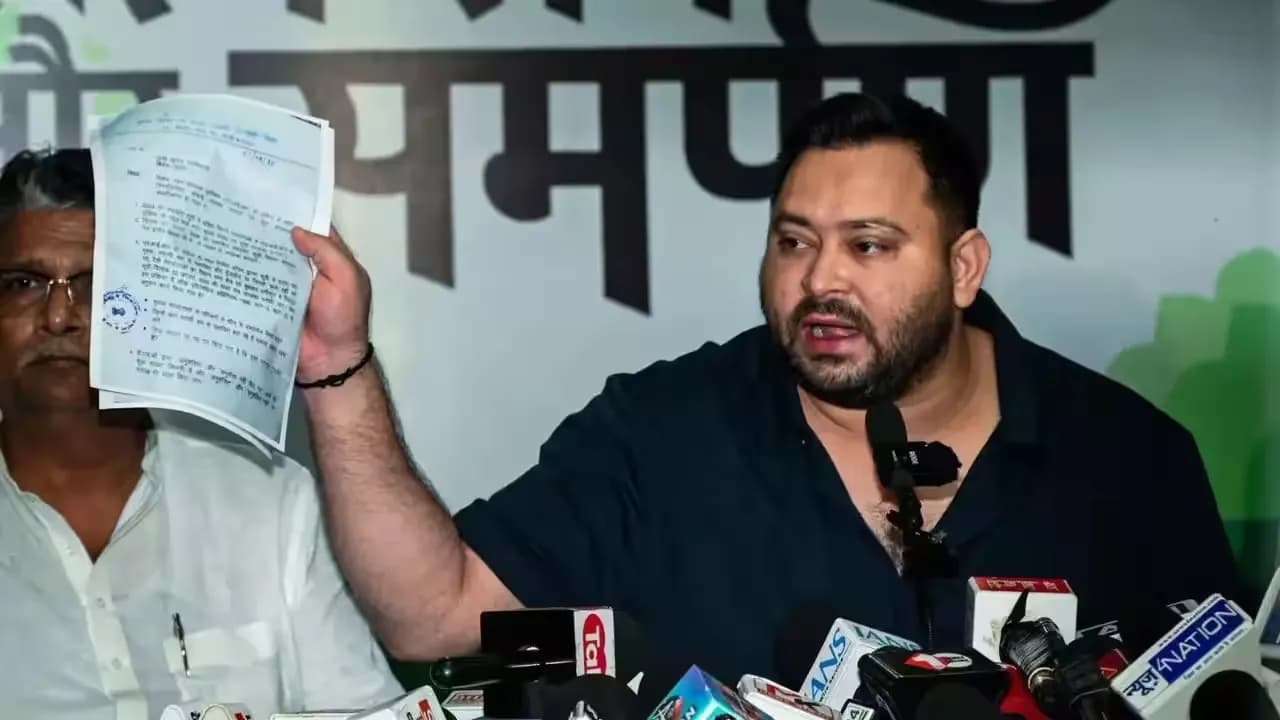
Rashtriya Janata Dal (RJD) leader and Bihar Assembly Leader of Opposition Tejashwi Yadav accused the ruling BJP-led alliance of misusing government machinery and allowing allegedly fraudulent names to remain on electoral rolls.
Yadav claimed that irregularities had affected the election process and said opposition candidates were facing pressure. He also expressed confidence that the opposition could win all eight seats.
These claims remain allegations and should not be treated as established findings of electoral fraud. JD(U) representatives rejected the opposition’s accusations and maintained that polling had proceeded smoothly overall.
Anant Singh’s Support for Jan Suraaj Candidate Creates JD(U) Tension
The Patna Graduates’ constituency emerged as a major political flashpoint after Mokama MLA Anant Singh backed Jan Suraaj Party candidate Anuj Singh against JD(U)’s incumbent candidate Neeraj Kumar.
The disagreement exposed tensions within the JD(U), as Anant Singh publicly supported a candidate competing against his own party’s official nominee. The contest attracted additional attention because Neeraj Kumar was seeking another term in the constituency.
Supporters of the two candidates reportedly clashed near the Mokama block office during polling. Police intervened to control the situation, and several people were detained in connection with incidents surrounding the election.
The episode has raised questions about internal coordination within the NDA and whether local rivalries could affect the alliance’s performance in the council elections.
Teachers’ Constituencies Record Higher Turnout
The provisional turnout figures showed substantially greater participation in teachers’ constituencies than in graduates’ constituencies.
Saran Teachers’ recorded the highest turnout among the eight seats at 87.16%, followed by Darbhanga Teachers’ at 79% and Tirhut Teachers’ at 78.10%. Patna Graduates’ recorded the lowest turnout among the graduates’ constituencies at 36.19%, while Patna Teachers’ recorded 56.89%.
The turnout difference has put the spotlight on voter mobilisation, constituency-level campaigning and the ability of political parties to reach their respective electorates. Final figures may differ slightly from the provisional numbers.
Polling Complaints Add to Political Tensions
Media reports also described complaints and police action at some polling locations. The reported incidents included allegations of attempts to vote using altered identity cards, disputes involving supporters and complaints concerning campaign conduct.
Election authorities and law-enforcement agencies will be responsible for determining the facts of individual incidents. Such reports should be distinguished from broader political allegations made by competing parties.
October 27 Results to Test Bihar’s Political Equations
The results, scheduled for October 27, are expected to provide an indication of the organisational strength of the NDA, the opposition and Jan Suraaj in these particular constituencies.
For the JD(U), the contest in Patna Graduates’ is especially significant because of the public disagreement between its official candidate and Anant Singh’s camp. For Jan Suraaj, the election offers an opportunity to test its appeal in a contest traditionally shaped by established party networks.
The outcome will not, by itself, determine the broader political balance in Bihar. However, the results may influence party strategy and negotiations as the state’s political competition continues.
Conclusion: Bihar’s MLC elections have become more than a contest for eight council seats. Allegations over electoral rolls, the Mokama confrontation and tensions within the JD(U) have placed political coordination and election conduct under scrutiny. The October 27 counting will determine the winners and provide a clearer picture of the parties’ performance.
Related Keywords
Join the discussion